
What kind of situation will the Chinese food industry look like in the future
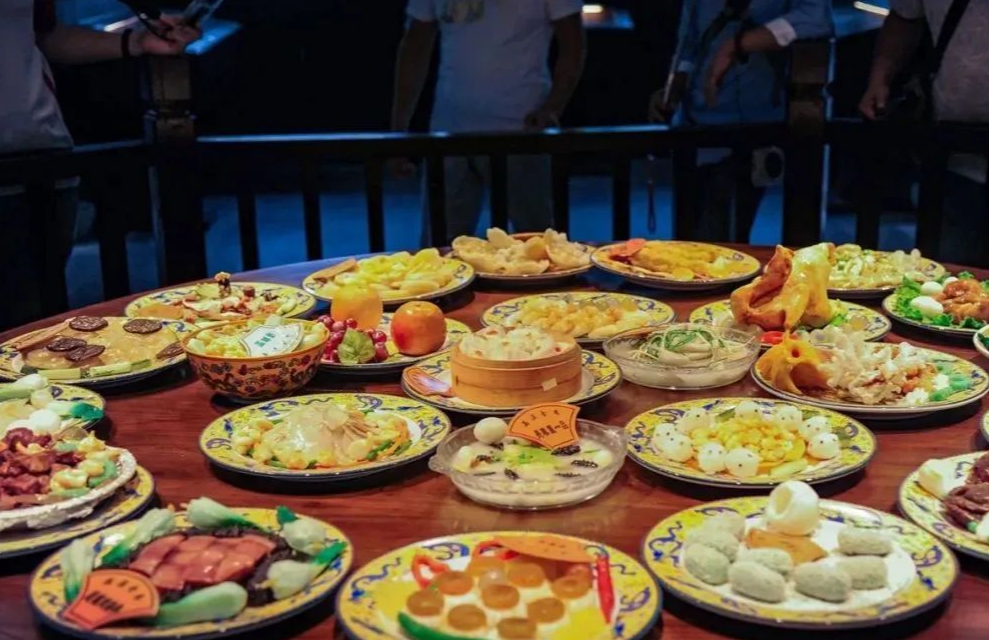
According to my analysis, "eating" is primarily aimed at socializing - "gathering" is the primary purpose of eating. Of course, the taste must be top-notch, otherwise we won't be able to achieve the goal of "socializing" and the per capita consumption standard won't matter. This type of restaurant is called a "high-end, distinctive" restaurant. This type of "food" place is the mainstream "food" place, but with the increasingly strict rectification of party conduct and the more comprehensive rule of law, the opportunities for profit through "communication" are becoming less and less. This type of food will lose its most mainstream customers - public funded diners and official banquet guests
2. The purpose of the essential "food" place for wrapping the abdomen is very clear: wrapping the abdomen. Of course, the taste is good, not careless, and time and consumption should not be excessive
3. Specialty single variety "food" section - single item store, including hot pot
4. Cheap economy restaurants - the first low-end version of the "food" section, are currently the most numerous restaurants
The first type of food will gradually decline due to the reasons I analyzed earlier. Each city follows the principle of natural selection and survival of the fittest, leaving behind few brand seeds and stores, representing the highest level of Chinese cuisine and existing for a long time. In addition to cooking, these types of shops will use a large number of technological products to replace manual labor. This type of model in Shanghai is like "Meilong Town", "Green Wave Corridor", etc. They do not have expansion genes, and their operations are in a state of "support". They are chicken ribs that are eaten without meat, but unfortunately abandoned. Many stores only exist for that "golden signboard". Of course, in the past two decades, many high-end restaurants have emerged, especially the flavors of Guangdong, Sichuan, Hunan, Guizhou, Zhejiang, and Huizhou, which are the main force representing the new generation of Chinese cuisine
Let's talk about the essential needs below. The method of "eating" that cannot be high in price, cannot last long, and cannot have a bad taste. For example, canteens, fast food restaurants, home meals, and takeout are the "Amazon" region in the Chinese food industry, with the richest "species" (business models) and the largest consumption scale. Due to the difficulty in finding people and the sensitivity to costs, it is also inevitable that technology has the deepest penetration in the field. In this field, regional chain cheap canteens and national canteens will emerge. The ingredients will be washed, cut, and prepared in factories, with large packaging and logistics distribution. Cooking will be done by "bison" or larger "flavor masters and dragons". The service will be self-service, and the tableware will be biodegradable and disposable. It costs about ten yuan to eat, making it healthy and delicious. The successful figure in creating the National Canteen will become a national hero, and its significance lies in saving as many people and things as possible every day. Extraordinary
The second type of canteen is the work canteen. In unit canteens where there are tens of thousands of people or even a dozen or so dining, the ingredients are either sourced from external sources and washed and cut, or self sourced and washed and cut. The recent Green City property management micro cafeteria hired an aunt to buy, wash, cut, and prepare food. One Wei Ba opened for two hours and served 50 people. As a result, takeout will be reduced in the future. The unit cafeteria uses a combination of bison and chefs for cooking, and provides meals according to the subsidized meal standards. The tableware is provided by oneself, clean and neat, delicious and fast
The third essential place to eat is Chinese fast food. Chinese fast food has been developing for 30 years, and it has been a passing smoke and cloud. However, some brands, such as "True Kung Fu" and "Lai Bi Bao" in Shanghai, have disappeared after a while of excitement. Chinese food cannot be standardized like McDonald's and KFC, and the service and utensils are not as simple as they are. Consumers are unwilling to pay extra for this, so they are dying on quality and efficiency. Based on the analysis that quality and efficiency determine the inevitable death of Chinese fast food, some people have found that quality standardization can be achieved by Wei Ba. Staying behind is only a matter of service and efficiency. Therefore, there are a group of fast food pioneers who have adopted "Wei Ba", such as "Xing Xiao Chef", "Qiao Chef", and "Zhen Chopstick Le". Everyone is waiting to see the results, or perhaps one day the never-ending giant Chinese fast food products will go global from them
The fourth type of "food" is usually referred to as small restaurants or roadside shops. With flexible management and delicious dishes, it provides consumers with an economical social and belly wrapping dual purpose place. This type of place always has a market, where classmates, old friends, neighbors, relatives, and elders gather together, making it a good place to go. However, due to the pandemic, the consumer market is unstable, and the high cost of hiring has an impact. It is common for us to open one batch, reverse one batch, and then open another. The "Iron Kitchen" brand, which has recently been tried as the "Kitchen God" in Guangzhou, is an economical multi series fashionable stir fried restaurant with over 100 square meters and only two people, achieving a turnover of 516000 yuan. Does this represent the future of roadside shops and small restaurants? Wait and see